Your Health, We Care
Release date: 2024-12-13 13:09:13 Article From: Lucius Laos Recommended: 618
In the phase Ib/II multicenter pivotal FELIX study, the autologous 41BB-ζ anti-CD19 chimeric antigen receptor (CAR) T-cell therapy, obecabtagene autoleucel, demonstrated a high response rate in adults with relapsed or refractory B-cell acute lymphoblastic leukemia (ALL), with side effects primarily observed in patients with a high bone marrow burden.
Additionally, obecabtagene autoleucel showed long-lasting responses, especially in patients with low-to-intermediate bone marrow burden, including those who did not receive consolidative allogeneic stem-cell transplantation. These findings were published by Dr. Claire Roddie from the Cancer Institute, University College London, and colleagues on November 27, 2024, in The New England Journal of Medicine.
Unlike tisagenlecleucel and brexucabtagene autoleucel, both of which use a high-affinity single-chain variable fragment (scFv) to target CD19, obecabtagene autoleucel utilizes a distinct scFv with intermediate affinity due to a fast off-rate. This difference is believed to reduce side effects and improve CAR T-cell engraftment and persistence.
Phase I trials of obecabtagene autoleucel in children and young adults with relapsed or refractory B-cell ALL showed a high response rate, durable persistence, and a low incidence of severe immune-related side effects.
Obecabtagene autoleucel was further evaluated in the phase I ALLCAR19 study involving adults aged 18 or older with relapsed or refractory B-cell ALL. Due to the increased risk of immune-related side effects in these adults, a bone marrow burden–guided split-dose regimen was applied. The therapy showed strong efficacy, with an 85% rate of measurable residual disease (MRD)-negative remission, and low incidences of grade 3 or higher cytokine release syndrome (CRS) (0%) and immune effector cell–associated neurotoxicity syndrome (ICANS) (15%). At a median follow-up of 43 months, 36% of patients remained in remission.
The FELIX study aimed to continue assessing the safety, efficacy, and scalability of obecabtagene autoleucel in adults with relapsed or refractory B-cell ALL. The main cohort 2A included patients with morphologic disease, while cohort 2B comprised patients with MRD. The primary endpoint was overall remission in cohort 2A, and secondary endpoints included event-free survival (EFS), overall survival (OS), and safety.
Of the 153 enrolled patients, 127 (83.0%) received at least one infusion of obecabtagene autoleucel and were evaluable. In cohort 2A, consisting of 94 patients with a median follow-up of 20.3 months, overall remission occurred in 77% (95% confidence interval [CI] 67 to 85), with 55% achieving complete remission (95% CI 45 to 66) and 21% achieving complete remission with incomplete hematologic recovery (95% CI 14 to 31). The prespecified null hypotheses for overall remission (≤40%) and complete remission (≤20%) were rejected (p < 0.001).
Among the 127 patients who received at least one infusion, with a median follow-up of 21.5 months, the median EFS was 11.9 months (95% CI 8.0 to 22.1), with estimated 6- and 12-month EFS rates of 65.4% and 49.5%, respectively. The median OS was 15.6 months (95% CI 12.9 to not evaluable), with estimated 6- and 12-month OS rates of 80.3% and 61.1%, respectively.
Patients with a low bone marrow burden (<5% blasts) or intermediate burden (5 to 75% blasts) before lymphodepletion showed better EFS than those with a high bone marrow burden (>75% blasts). This suggests that a low-to-intermediate bone marrow burden is optimal for CAR T-cell efficacy and toxicity, and that better tumor clearance prior to CAR T-cell therapy may improve outcomes. The study team also suggested that earlier-line consolidation with obecabtagene autoleucel, particularly for MRD-positive patients, warrants further investigation.
Grade 3 or higher CRS occurred in 2.4% of patients, and grade 3 or higher ICANS occurred in 7.1%. Severe ICANS after infusion were primarily observed in patients with a high bone marrow burden before lymphodepletion, suggesting that obecabtagene autoleucel may be safely administered in outpatient settings for patients with low bone marrow burden.
The authors noted that while blinatumomab and inotuzumab ozogamicin have been shown to increase response rates in relapsed or refractory B-cell ALL, consolidative allogeneic stem-cell transplantation is still necessary for durable responses. In comparison, although brexucabtagene autoleucel achieved a 71% overall remission rate, it was associated with a significantly higher incidence of grade 3 or higher CRS, grade 3 or higher ICANS, and vasopressor use compared to obecabtagene autoleucel.
Lucius Pharmaceuticals Version of Vibegron Now Available1.Basic Drug InformationVibegron (generic name: vibegron) is an oral, once-daily β3-adrenergic receptor agonist approved by ···【more】
Recommended:322Release date: 2026-08-06
Lucius Pharmaceuticals version of Ibrutinib is now availableIn a randomized controlled trial of 269 previously untreated CLL/SLL patients aged 65 years and older, ibrutinib demonst···【more】
Recommended:363Release date: 2026-08-03
Alectinib Has Been Launched in LaosAlectinib is an oral targeted therapeutic drug belonging to the class of ALK inhibitors. Unlike traditional chemotherapy, it does not act by kill···【more】
Recommended:280Release date: 2026-07-30
Lucius Pharmaceuticals Quizartinib (Quizartinib) Has Been Launched(1) Quizartinib is an oral tablet. The recommended dose is once daily, one tablet per day (the specific dose is de···【more】
Recommended:296Release date: 2026-07-29
Lucius version of Dacomitinib is now availableCutaneous adverse reactions and management strategies for DacomitinibRash and exfoliative skin reactions are highly characteristic adv···【more】
Recommended:324Release date: 2026-07-21
Lao PDR: Filgotinib Has Been LaunchedBefore initiating filgotinib treatment, strict screening for the following contraindications is mandatory; the presence of any one of these con···【more】
Recommended:296Release date: 2026-07-13
Lucius Pharmaceuticals' Pirtobrutinib Has Been LaunchedPirtobrutinib is an oral anticancer drug whose active ingredient is pirtobrutinib, belonging to the class of Bruton's···【more】
Recommended:325Release date: 2026-07-10
Lucius Pharmaceuticals (Lao) Co., Ltd. has launched a generic version of elagolix sodium (trade name LuciElag) for the treatment of moderate to severe pain associated with endometr···【more】
Recommended:338Release date: 2026-07-06
Contraindications for Bempedoic Acid (Nilemdo)Bempedoic acid (Nilemdo) is strictly contraindicated in the following situations: ①hypersensitivity to bempedoic acid or any excipient···【more】
Recommended:308Release date: 2026-07-03
MONDAY, June 15, 2026 — A study published online June 8 in Nature Medicine has found that apitegromab, through its selective inhibition of myostatin, can maintain lean body mass wh···【more】
Recommended:389Release date: 2026-06-24
On May 28, 2026, AstraZeneca announced that its immunotherapy drug Imfinzi (durvalumab) in combination with BCG (Bacillus Calmette-Guérin) induction and maintenance regimen has rec···【more】
Recommended:465Release date: 2026-06-01
On November 21, 2025, the U.S. Food and Drug Administration (FDA) approved the regimen of pembrolizumab (Keytruda, Merck & Co., Inc.) or pembrolizumab and berahyaluronidase alf···【more】
Recommended:790Release date: 2025-12-17
Dr. Louis, a microbiologist at the World Health Organization (WHO), recently made a technical visit to Lucius Pharmaceuticals in Laos. The purpose of the visit was to learn more ab···【more】
Recommended:1047Release date: 2024-07-09
Lung cancer is the most rapidly increasing malignant tumor with the fastest increasing morbidity and mortality, which has been troubling medical workers. Clinical studies have foun···【more】
Recommended:991Release date: 2024-07-09
In recent years, leveraging the World Trade Organization (WTO) patent waiver for least-developed countries (extended to July 1, 2033), Laos has been legally permitted to produce ge···【more】
Recommended:482Release date: 2026-08-05
How Can Chinese Patients Access Generic Drugs from Laos?In recent years, generic drugs from Laos have gradually entered the view of Chinese cancer and chronic disease patients due ···【more】
Recommended:445Release date: 2026-08-04
Leveraging the WTO patent waiver for least-developed countries (extended to 2033), Laos has seen rapid growth in its generic pharmaceutical industry in recent years. Lucius Pharmac···【more】
Recommended:512Release date: 2026-07-31
Lucius Pharmaceutical is a modern pharmaceutical enterprise headquartered in Vientiane, the capital of Laos. The company was established in 2020, with its R&D and operational s···【more】
Recommended:360Release date: 2026-07-28
Lucius Pharmaceuticals Relocates from India to Laos: A Five-Year Development Journey of a Generic Drug CompanyRelocation Background and Strategic ShiftLucius Pharmaceuticals was fo···【more】
Recommended:553Release date: 2026-07-24
In recent years, Laos has gradually become a major global supply source for generic drugs, leveraging the WTO-granted patent exemption for least-developed countries. Among them, Lu···【more】
Recommended:369Release date: 2026-07-22
Company Overview: Industrial Migration from India to LaosLucius Pharmaceuticals (Laos) Co., Ltd. was established in 2020, with its headquarters located at No. 26, Thongmang Village···【more】
Recommended:414Release date: 2026-07-20
Lucius Pharmaceutical is one of the representative generic drug enterprises in Laos. The company was established in Vientiane, the capital of Laos, in 2020 and has been in operatio···【more】
Recommended:410Release date: 2026-07-17
Industrial Rise: From Zero to a "World Pharmacy" CandidateThe explosive growth of Laos' generic drug industry is rooted in unique international rule dividends. As a U···【more】
Recommended:512Release date: 2026-07-16
In recent years, Laos generic drugs have gradually come into view of oncology and chronic disease patients in China due to their significant price advantage. Leveraging the WTO pat···【more】
Recommended:353Release date: 2026-07-15
Regulatory System: From "One Ministry, One Department" to Legal AmendmentsLao drug regulation adopts a centralized "one ministry, one department" management mod···【more】
Recommended:457Release date: 2026-07-14
Overview of Lao generic drug industryThe Lao generic drug industry started late but has developed rapidly in recent years. Relying on the WTO's patent waiver for least develope···【more】
Recommended:485Release date: 2026-07-09
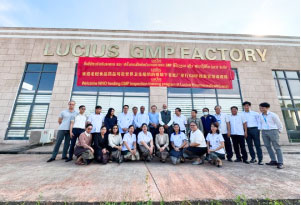
Lucius Pharmaceuticals (Lao) LTD. (Lucius Pharmaceuticals), with its manufacturing campus in Laos located in the capital city of Vientiane in 2020, officially begins its great journey to make effective and affordable medicines available to people in need around the world...More

Lucius Pharmaceutical Co., Ltd., was established in 2020 in Vientiane, the capital of Laos. It aims to offer safe, effective, and affordable medicines globally. With a factory spanning 25,000 square meters, the company manufactures 200+ generic drugs in diverse therapeutic fields.
Address: No.26 Thongmang village, Xaythany district, Vientiane Capital, Laos
E-mail:laoslucius@gmail.com

Name: Lucius
Telegram name: Vira
No.:0085253923643
Telegram name: Vira
No.:0085253923643