Your Health, We Care
Release date: 2025-12-15 15:11:02 Article From: Lucius Laos Recommended: 333
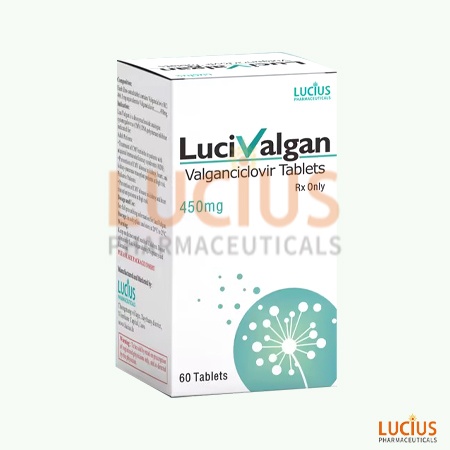
① Treatment of CMV Retinitis in patients with AIDS;
② Prevention of cytomegalovirus disease in high - risk patients undergoing kidney, heart, and kidney - pancreas transplantation.
Prevention of CMV disease in high - risk pediatric patients who have undergone kidney or heart transplantation.
Valganciclovir Hydrochloride Tablets should be administered orally with food (see Pharmacokinetic Characteristics - Absorption). Valganciclovir Hydrochloride Tablets are rapidly and extensively converted to ganciclovir. The bioavailability of Valganciclovir Hydrochloride Tablets, measured as ganciclovir, is 10 times higher than that of ganciclovir capsules. Therefore, the dosage and administration instructions of Valganciclovir Hydrochloride Tablets described below must be strictly followed (see Precautions and Overdosage).
Induction Therapy for CMV Retinitis:For patients with active CMV Retinitis, the recommended dosage is 900 mg (two 450 mg tablets) twice daily for 21 days. Prolonging induction therapy may increase the risk of myelotoxicity (see Precautions).
Maintenance Therapy for CMV Retinitis:After induction therapy, or for patients with inactive CMV Retinitis, the recommended dosage is 900 mg (two 450 mg tablets) once daily. Patients with worsening retinitis may undergo repeated induction therapy (see Induction Therapy).
Prevention of CMV Infection in Transplant Patients:For patients who have undergone solid organ transplantation, the recommended dosage is 900 mg (two 450 mg tablets) once daily, starting within 10 days after transplantation and continuing until 100 days after transplantation.
Patients with Renal Impairment:Serum creatinine levels or creatinine clearance rate should be closely monitored. Dosage adjustment should be made according to the creatinine clearance rate as shown below (see Pharmacokinetics in Special Populations and Precautions).
The creatinine clearance rate can be estimated from serum creatinine using the following formulas:
For males: [(140 - age (years)) × body weight (kg)] ÷ (72 × (0.011 × serum creatinine (μmol/L)))
For females: 0.85 × the value calculated for males
Patients Undergoing Hemodialysis:No recommended dosage can be provided for patients undergoing hemodialysis (CrCl < 10 mL/min), so Valganciclovir Hydrochloride Tablets should not be used in such patients (see Pharmacokinetics in Special Populations and Precautions).
Patients with Severe Leukopenia, Neutropenia, Anemia, Thrombocytopenia, or Pancytopenia:Cases of severe leukopenia, neutropenia, anemia, thrombocytopenia, pancytopenia, myelosuppression, and aplastic anemia have been reported in patients treated with Valganciclovir Hydrochloride Tablets (or ganciclovir). Treatment with Valganciclovir Hydrochloride Tablets must not be initiated if the absolute neutrophil count is less than 500 cells/μL, the platelet count is less than 25,000 cells/μL, or the hemoglobin level is less than 8 g/dL (see Warnings, Precautions, and Adverse Reactions).
After oral administration, valganciclovir (a prodrug) is converted to ganciclovir (the active drug). Therefore, VALCYTE is expected to have reproductive toxicity similar to that of ganciclovir. In animal studies, ganciclovir caused maternal - fetal toxicity and embryo - fetal mortality in pregnant mice and rabbits, and teratogenicity in rabbits at a dose twice the human exposure level. There are no available human data on the use of VALCYTE or ganciclovir in pregnant women to determine the risk associated with the drugs. The background risk of major birth defects and miscarriage in this population is unclear. Data from in vitro and in vivo human placental models show that ganciclovir can cross the human placenta. This transfer occurs through passive diffusion, and there is no saturated transfer within the concentration range of 1 to 10 mg/mL.
Currently, there are no data on the presence of valganciclovir (the prodrug) or ganciclovir (the active drug) in human milk, the effects on breastfed infants, or the effects on milk production. Animal study data indicate that ganciclovir is excreted in the milk of lactating rats. The Centers for Disease Control and Prevention (CDC) recommends that mothers infected with HIV should not breastfeed their infants to avoid the risk of postnatal HIV transmission. Lactating mothers are advised not to breastfeed during treatment with VALCYTE, as breastfed infants may experience serious adverse events and there is a potential risk of HIV transmission.
Women of childbearing age should undergo a pregnancy test before starting treatment with VALCYTE.
Females: Due to the mutagenic and teratogenic potential of VALCYTE, women of childbearing age should be advised to use effective contraceptive measures during treatment and for at least 30 days after the end of treatment with VALCYTE.
Males: Due to the mutagenic potential of VALCYTE, men should be advised to use condoms during treatment and for at least 90 days after the end of treatment with VALCYTE.
Infertility: The recommended dosage of VALCYTE may cause temporary or permanent infertility in both women and men.
VALCYTE oral solution and tablets are indicated for the prevention of CMV disease in pediatric kidney transplant patients aged 4 months to 16 years and pediatric heart transplant patients aged 1 month to 16 years who are at risk of developing CMV disease.
The use of VALCYTE oral solution and tablets for preventing CMV disease in pediatric kidney transplant patients aged 4 months to 16 years is based on two single - arm, open - label, non - comparative studies involving patients in the same age group. Study 1 was a safety and pharmacokinetic study in pediatric patients who had undergone solid organ transplantation (kidney, liver, heart, and kidney/pancreas). VALCYTE was administered once daily within 10 days after transplantation, with the longest treatment duration of 100 days post - transplantation. Study 2 was a safety and tolerability study in pediatric kidney transplant patients, where VALCYTE was administered once daily within 10 days after transplantation, with the longest treatment duration of 200 days post - transplantation. The results of these studies are supported by previous demonstrations of efficacy in adult patients.
The use of VALCYTE oral solution and tablets for preventing CMV disease in pediatric heart transplant patients aged 1 month to 16 years is based on two studies (Study 1 mentioned above and Study 3) and is supported by previous evidence of efficacy in adult patients. Study 3 was a pharmacokinetic and safety study of VALCYTE in pediatric heart transplant patients younger than 4 months, who received VALCYTE oral solution once daily for two consecutive days. Based on the available pharmacokinetic data from pediatric and adult patients, a physiologically based pharmacokinetic (PBPK) model has been established to support the use of VALCYTE in heart transplant patients younger than 1 month. However, due to the uncertainty in the prediction of the neonatal model, VALCYTE is not indicated for prevention in this age group.
The safety and efficacy of VALCYTE oral solution and tablets for preventing CMV disease in children have not been established, including pediatric liver transplant patients, kidney transplant patients younger than 4 months, heart transplant patients younger than 1 month, pediatric AIDS patients with CMV Retinitis, and infants with congenital CMV infection.
No studies have been conducted on VALCYTE oral solution or tablets in adults over 65 years of age. Clinical studies of VALCYTE did not include a sufficient number of subjects aged 65 years and above, so it is impossible to determine whether their responses are different from those of younger subjects. In general, dosage selection for elderly patients should be cautious, and treatment usually starts at the lower end of the dosage range. This is because elderly patients are more likely to experience decreased liver, kidney, or cardiac function, as well as concurrent diseases or other drug therapies. It is well known that VALCYTE is largely excreted through the kidneys, so patients with impaired renal function may have a higher risk of toxic reactions. Since renal clearance decreases with age, the renal status of elderly patients should be taken into account when administering VALCYTE. Renal function should be monitored and the dosage adjusted accordingly.
Dose reduction is recommended for patients with renal impairment receiving VALCYTE. VALCYTE tablets should not be used in adult patients undergoing hemodialysis (CrCl < 10 mL/min). Adult hemodialysis patients should use ganciclovir according to the dose reduction algorithm.
No studies have been conducted on the safety and efficacy of VALCYTE in patients with impaired hepatic function.
The absolute bioavailability of Valganciclovir Hydrochloride Tablets, measured as ganciclovir, is 10 times higher than that of ganciclovir capsules. Valganciclovir Hydrochloride Tablets cannot replace ganciclovir capsules at a 1:1 ratio.
Patients who are switching from ganciclovir capsules to Valganciclovir Hydrochloride Tablets should be informed of the risk of overdose if they take more than the prescribed dosage of Valganciclovir Hydrochloride Tablets (see Dosage and Administration and Overdosage).
It is recommended to monitor the complete blood count and platelet count during treatment. For patients with severe leukopenia, neutropenia, anemia, and/or thrombocytopenia, treatment with hematopoietic growth factors is recommended and/or consideration should be given to discontinuing the medication (see Special Dosage Guidelines and Adverse Reactions).
For patients with renal impairment, the dosage needs to be adjusted according to the creatinine clearance rate (see Special Dosage Guidelines and Pharmacokinetics in Special Populations).
No recommended dosage can be provided for patients undergoing hemodialysis (CrCl < 10 mL/min), so Valganciclovir Hydrochloride Tablets should not be used in such patients (see Special Dosage Guidelines and Pharmacokinetics in Special Populations).
Convulsions, sedation, dizziness, ataxia, and/or confusion have been reported after the administration of Valganciclovir Hydrochloride Tablets and/or ganciclovir. If these symptoms occur, they may affect activities that require concentration, including the patient's ability to drive and operate machinery.
Convulsions have been reported in patients receiving a combination of imipenem - cilastatin (Tienam) and ganciclovir. Valganciclovir Hydrochloride Tablets should not be used in combination with Tienam unless the potential benefits outweigh the potential risks (see Drug Interactions).
Both zidovudine and Valganciclovir Hydrochloride Tablets may cause neutropenia and anemia when used alone. Some patients may not tolerate the full dosage of the combined use of these two drugs (see Drug Interactions).
Concurrent use of Valganciclovir Hydrochloride Tablets may increase the plasma concentration of didanosine; therefore, close monitoring for didanosine - related toxicity is recommended (see Drug Interactions).
Combined use of Valganciclovir Hydrochloride Tablets with other drugs known to cause myelosuppression or associated with renal impairment may increase toxicity (see Drug Interactions).
No in vivo drug interaction studies have been conducted with valganciclovir. However, since valganciclovir is rapidly and extensively converted to ganciclovir, valganciclovir is expected to have drug interactions similar to those of ganciclovir. Studies on drug interactions of ganciclovir have been conducted in patients with normal renal function. After co - administration of VALCYTE with other renally excreted drugs, patients with impaired renal function may experience increased concentrations of both ganciclovir and the co - administered drugs. Therefore, close monitoring for toxicity of ganciclovir and the co - administered drugs is recommended in these patients.
Experience with VALCYTE Tablets Overdosage: Overdosage of VALCYTE may lead to increased nephrotoxicity. Since ganciclovir is dialyzable, hemodialysis may help reduce the serum concentration of ganciclovir in patients with VALCYTE overdosage. Adequate hydration should be maintained. The use of hematopoietic growth factors should be considered.
Adverse reactions have been reported after valganciclovir overdosage in clinical trials and post - marketing experience, some of which have resulted in death. Most patients experienced one or more of the following adverse reactions:
Hematotoxicity: Myelosuppression, including pancytopenia, bone marrow failure, leukopenia, neutropenia, and granulocytopenia.
Hepatotoxicity: Hepatitis and abnormal liver function.
Nephrotoxicity: Aggravated hematuria in patients with pre - existing renal impairment, acute kidney injury, and elevated creatinine levels.
Gastrointestinal toxicity: Abdominal pain, diarrhea, and vomiting.
Neurotoxicity: Generalized tremors and seizures.
VALCYTE is contraindicated in patients with clinically significant hypersensitivity (such as anaphylaxis) to valganciclovir, ganciclovir, or any component of the formulation.
Tablets.
Store at 20°C - 25°C (68°F - 77°F). Short - term transportation is allowed within a temperature range of 15°C - 30°C (59°F - 86°F).
On November 21, 2025, the U.S. Food and Drug Administration (FDA) approved the regimen of pembrolizu···【more】
Recommended:[list:visits]2025-17-12
Lung cancer is the most rapidly increasing malignant tumor with the fastest increasing morbidity and···【more】
Recommended:[list:visits]2024-09-07
Lucius Pharmaceuticals Version of Vibegron Now Available1.Basic Drug InformationVibegron (generic na···【more】
Recommended:[list:visits]2026-06-08
In recent years, leveraging the World Trade Organization (WTO) patent waiver for least-developed cou···【more】
Recommended:[list:visits]2026-05-08
How Can Chinese Patients Access Generic Drugs from Laos?In recent years, generic drugs from Laos hav···【more】
Recommended:[list:visits]2026-04-08
Lucius Pharmaceuticals version of Ibrutinib is now availableIn a randomized controlled trial of 269 ···【more】
Recommended:[list:visits]2026-03-08
Leveraging the WTO patent waiver for least-developed countries (extended to 2033), Laos has seen rap···【more】
Recommended:[list:visits]2026-31-07
Alectinib Has Been Launched in LaosAlectinib is an oral targeted therapeutic drug belonging to the c···【more】
Recommended:[list:visits]2026-30-07
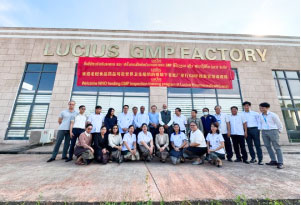
Lucius Pharmaceuticals (Lao) LTD. (Lucius Pharmaceuticals), with its manufacturing campus in Laos located in the capital city of Vientiane in 2020, officially begins its great journey to make effective and affordable medicines available to people in need around the world...More

Lucius Pharmaceutical Co., Ltd., was established in 2020 in Vientiane, the capital of Laos. It aims to offer safe, effective, and affordable medicines globally. With a factory spanning 25,000 square meters, the company manufactures 200+ generic drugs in diverse therapeutic fields.
Address: No.26 Thongmang village, Xaythany district, Vientiane Capital, Laos
E-mail:laoslucius@gmail.com

Name: Lucius

Telegram name: Vira
No.:0085253923643
Telegram name: Vira
No.:0085253923643