Your Health, We Care
Release date: 2025-12-08 13:45:21 Article From: Lucius Laos Recommended: 265
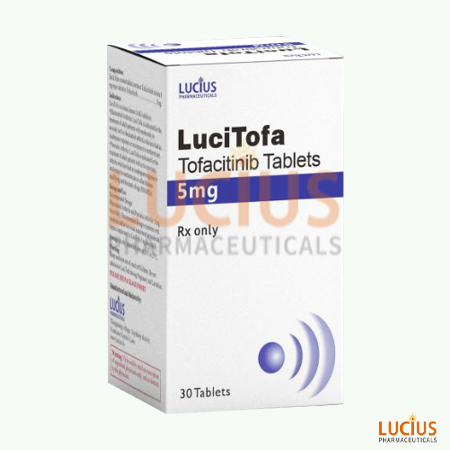
Rheumatoid Arthritis: Tofacitinib is indicated for the treatment of adult patients with moderately to severely active rheumatoid arthritis who have had an inadequate response or intolerance to methotrexate. It may be used as monotherapy or in combination with methotrexate or other non-biologic disease-modifying antirheumatic drugs (DMARDs).
Usage Restriction: Concomitant use of LuciTofa with biologic DMARDs or potent immunosuppressants such as azathioprine and cyclosporine is not recommended.
Psoriatic Arthritis: Tofacitinib is indicated for the treatment of adult patients with active psoriatic arthritis who have had an inadequate response or intolerance to methotrexate or other disease-modifying antirheumatic drugs (DMARDs).
Usage Restriction: Concomitant use of Tofacitinib with biologic DMARDs or potent immunosuppressants such as azathioprine and cyclosporine is not recommended.
Ulcerative Colitis: Tofacitinib is indicated for the treatment of adult patients with moderately to severely active ulcerative colitis (UC).
Usage Restriction: Concomitant use of Tofacitinib with biologic therapies for UC or potent immunosuppressants such as azathioprine and cyclosporine is not recommended.
Do not initiate Tofacitinib if the absolute lymphocyte count is <500 cells/mm³, absolute neutrophil count (ANC) is <1000 cells/mm³, or hemoglobin is <9 g/dL.
Rheumatoid Arthritis: Tofacitinib 5 mg twice daily. For patients with moderate to severe renal impairment or moderate hepatic impairment, the recommended dosage is Tofacitinib 5 mg once daily.
Psoriatic Arthritis (in combination with non-biologic DMARDs): Tofacitinib 5 mg twice daily. For patients with moderate to severe renal impairment or moderate hepatic impairment, the recommended dosage is Tofacitinib 5 mg once daily.
Ulcerative Colitis: Tofacitinib 10 mg twice daily for at least 8 weeks; then 5 mg or 10 mg twice daily. Discontinue treatment after 16 weeks if an adequate therapeutic response is not achieved. Use the lowest effective dosage to maintain response.
For patients with moderate to severe renal impairment or moderate hepatic impairment: Half the total daily recommended dosage for patients with normal renal and hepatic function.
Refer to the full prescribing information for indicated dosage adjustments in patients receiving CYP2C19 and/or CYP3A4 inhibitors; patients with moderate or severe renal impairment or moderate hepatic impairment; and patients with lymphopenia, neutropenia, or anemia. Tofacitinib is not recommended for use in patients with severe hepatic impairment in any patient population.
Lactation: Breastfeeding is not recommended.
Serious Infections: Avoid use of LuciTofa during active serious infections, including localized infections.
Gastrointestinal Perforation: Use with caution in patients at increased risk.
Laboratory Monitoring: Recommended due to potential changes in lymphocytes, neutrophils, hemoglobin, liver enzymes, and lipids.
Immunization: Live Vaccines: Avoid concurrent use with LuciTofa.
For clinically relevant drug interactions, refer to the full prescribing information.
Rheumatoid Arthritis and Psoriatic Arthritis: Reported within the first 3 months of controlled clinical trials in rheumatoid arthritis, occurring in ≥2% of patients receiving LuciTofa as monotherapy or in combination with DMARDs: upper respiratory tract infection, nasopharyngitis, diarrhea, and headache.
Ulcerative Colitis: Reported in ≥5% of patients treated with LuciTofa 5 mg or 10 mg twice daily in induction or maintenance clinical trials, and ≥1% higher than in patients receiving placebo: nasopharyngitis, increased cholesterol levels, headache, upper respiratory tract infection, increased blood creatine phosphokinase, rash, diarrhea, and herpes zoster.
Contraindicated in patients with active infections.
Contraindicated in patients with hypoalbuminemia (<9 g/dL).
May be used in pregnant women only if the potential benefit justifies the potential risk to the fetus.
Animal studies have shown that this product is excreted in rat milk; excretion in human milk has not been determined. Lactating women should weigh the importance of the product to themselves and choose to discontinue the drug or breastfeeding.
Efficacy in pediatric patients has not been established.
Tablets.
Storage Conditions.
Store at 20°C to 25°C (68°F to 77°F); excursions permitted between 15°C and 30°C (59°F to 86°F) for short-term transport. Protect from moisture.
On November 21, 2025, the U.S. Food and Drug Administration (FDA) approved the regimen of pembrolizu···【more】
Recommended:[list:visits]2025-17-12
Lung cancer is the most rapidly increasing malignant tumor with the fastest increasing morbidity and···【more】
Recommended:[list:visits]2024-09-07
Lucius Pharmaceuticals Version of Vibegron Now Available1.Basic Drug InformationVibegron (generic na···【more】
Recommended:[list:visits]2026-06-08
In recent years, leveraging the World Trade Organization (WTO) patent waiver for least-developed cou···【more】
Recommended:[list:visits]2026-05-08
How Can Chinese Patients Access Generic Drugs from Laos?In recent years, generic drugs from Laos hav···【more】
Recommended:[list:visits]2026-04-08
Lucius Pharmaceuticals version of Ibrutinib is now availableIn a randomized controlled trial of 269 ···【more】
Recommended:[list:visits]2026-03-08
Leveraging the WTO patent waiver for least-developed countries (extended to 2033), Laos has seen rap···【more】
Recommended:[list:visits]2026-31-07
Alectinib Has Been Launched in LaosAlectinib is an oral targeted therapeutic drug belonging to the c···【more】
Recommended:[list:visits]2026-30-07
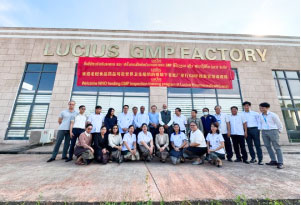
Lucius Pharmaceuticals (Lao) LTD. (Lucius Pharmaceuticals), with its manufacturing campus in Laos located in the capital city of Vientiane in 2020, officially begins its great journey to make effective and affordable medicines available to people in need around the world...More

Lucius Pharmaceutical Co., Ltd., was established in 2020 in Vientiane, the capital of Laos. It aims to offer safe, effective, and affordable medicines globally. With a factory spanning 25,000 square meters, the company manufactures 200+ generic drugs in diverse therapeutic fields.
Address: No.26 Thongmang village, Xaythany district, Vientiane Capital, Laos
E-mail:laoslucius@gmail.com

Name: Lucius

Telegram name: Vira
No.:0085253923643
Telegram name: Vira
No.:0085253923643