Your Health, We Care
Release date: 2026-03-23 14:50:29 Article From: Lucius Laos Recommended: 243
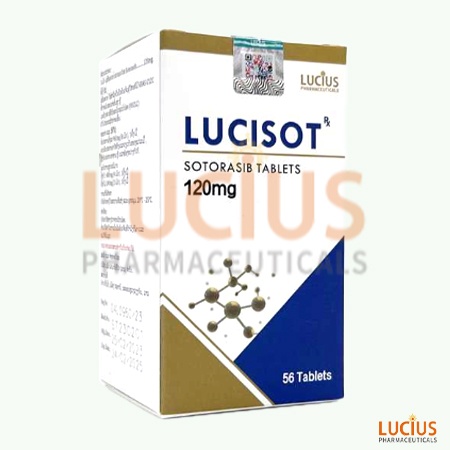
Sotorasib is a KRASG12C inhibitor developed by Amgen. It received accelerated approval from the U.S. Food and Drug Administration (FDA) in May 2021 and was subsequently launched.
While taking Sotorasib, consult your doctor immediately if you experience any of the following side effects:
Chest pain or tightness, cough, dark urine, fever or chills, light-colored stools, loss of appetite, nausea or vomiting, sneezing, sore throat, stomach pain, difficulty breathing, unusual tiredness or weakness, yellowing of the eyes or skin, etc.
While taking Sotorasib, some side effects may be mild and may resolve on their own during treatment.
Consult your doctor if any of the following side effects persist:
Blistering, crusting, irritation, itching, or redness of the skin; constipation; cracked, dry, or scaly skin; diarrhea; difficulty moving; joint or bone pain; fatigue or loss of strength; muscle aches, cramps, pain, or stiffness; flat or slightly raised rash on the skin; swelling of the hands, ankles, feet, or lower legs; swelling of the testicles, etc.
Common Adverse Reactions
Common adverse reactions to Sotorasib include diarrhea, musculoskeletal pain, nausea, fatigue, hepatotoxicity, and cough. The most common laboratory abnormalities include lymphocytopenia, decreased hemoglobin, increased aspartate aminotransferase (AST), increased alanine aminotransferase (ALT), decreased calcium, increased alkaline phosphatase, increased urine protein, and decreased sodium.
Serious Adverse Reactions
Serious adverse reactions to Sotorasib include pneumonia, hepatotoxicity, and diarrhea. The most common severe (Grade 3 or higher) adverse reactions are increased ALT, increased AST, and diarrhea. Fatal adverse reactions include respiratory failure, pneumonia, cardiac arrest, heart failure, gastric ulcer, and pneumonitis.
Very common (10% or more): Lymphocytopenia (up to 48%), decreased hemoglobin (up to 43%), prolonged activated partial thromboplastin time (up to 23%), anemia.
Very common (10% or more): Diarrhea (up to 42%), nausea (up to 26%), vomiting (up to 17%), constipation (up to 16%), abdominal pain (including abdominal pain, upper abdominal pain, lower abdominal pain; up to 15%).
Frequency not reported: Gastric ulcer.
Very common (10% or more): Increased AST (up to 39%), increased ALT (up to 38%), hepatotoxicity (including increased ALT, increased AST, increased blood bilirubin, drug-induced liver injury, hepatitis, hepatotoxicity, abnormal liver function tests, increased transaminases; up to 25%).
Very common (10% or more): Decreased calcium (up to 35%), increased alkaline phosphatase (up to 33%), decreased sodium (up to 28%), fatigue (including fatigue, asthenia; up to 26%), decreased albumin (up to 22%), edema (including generalized edema, localized edema, edema, peripheral edema, periorbital edema, testicular edema; up to 15%), pyrexia.
Common (1% to 10%): Peripheral edema.
Very common (10% or more): Musculoskeletal pain (including back pain, bone pain, musculoskeletal chest pain, musculoskeletal discomfort, musculoskeletal pain, myalgia, neck pain, non-cardiac chest pain, pain in extremity; up to 35%), arthralgia (up to 12%).
Very common (10% or more): Increased urine protein (up to 29%).
Common (1% to 10%): Urinary tract infection.
Very common (10% or more): Cough (including cough, productive cough, upper-airway cough syndrome; up to 20%), dyspnea (including dyspnea, exertional dyspnea; up to 16%), pneumonia (including pneumonia, aspiration pneumonia, bacterial pneumonia, staphylococcal pneumonia; up to 12%).
Frequency not reported: Respiratory failure, pneumonitis, interstitial lung disease (ILD).
Common (1% to 10%): Hypertension.
Frequency not reported: Cardiac arrest, heart failure.
Very common (10% or more): Decreased appetite (up to 13%).
Common (1% to 10%): Hypokalemia, hyponatremia, hypocalcemia.
Very common (10% or more): Rash (including dermatitis, acneiform dermatitis, rash, maculopapular rash, pustular rash; up to 12%).
Very common (10% or more): Headache.
On November 21, 2025, the U.S. Food and Drug Administration (FDA) approved the regimen of pembrolizu···【more】
Recommended:[list:visits]2025-17-12
Lung cancer is the most rapidly increasing malignant tumor with the fastest increasing morbidity and···【more】
Recommended:[list:visits]2024-09-07
Lucius Pharmaceuticals Version of Vibegron Now Available1.Basic Drug InformationVibegron (generic na···【more】
Recommended:[list:visits]2026-06-08
In recent years, leveraging the World Trade Organization (WTO) patent waiver for least-developed cou···【more】
Recommended:[list:visits]2026-05-08
How Can Chinese Patients Access Generic Drugs from Laos?In recent years, generic drugs from Laos hav···【more】
Recommended:[list:visits]2026-04-08
Lucius Pharmaceuticals version of Ibrutinib is now availableIn a randomized controlled trial of 269 ···【more】
Recommended:[list:visits]2026-03-08
Leveraging the WTO patent waiver for least-developed countries (extended to 2033), Laos has seen rap···【more】
Recommended:[list:visits]2026-31-07
Alectinib Has Been Launched in LaosAlectinib is an oral targeted therapeutic drug belonging to the c···【more】
Recommended:[list:visits]2026-30-07
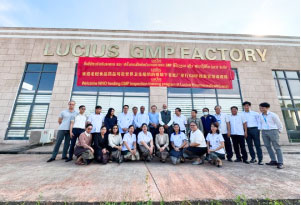
Lucius Pharmaceuticals (Lao) LTD. (Lucius Pharmaceuticals), with its manufacturing campus in Laos located in the capital city of Vientiane in 2020, officially begins its great journey to make effective and affordable medicines available to people in need around the world...More

Lucius Pharmaceutical Co., Ltd., was established in 2020 in Vientiane, the capital of Laos. It aims to offer safe, effective, and affordable medicines globally. With a factory spanning 25,000 square meters, the company manufactures 200+ generic drugs in diverse therapeutic fields.
Address: No.26 Thongmang village, Xaythany district, Vientiane Capital, Laos
E-mail:laoslucius@gmail.com

Name: Lucius

Telegram name: Vira
No.:0085253923643
Telegram name: Vira
No.:0085253923643