Your Health, We Care
Release date: 2025-12-16 14:54:48 Article From: Lucius Laos Recommended: 402
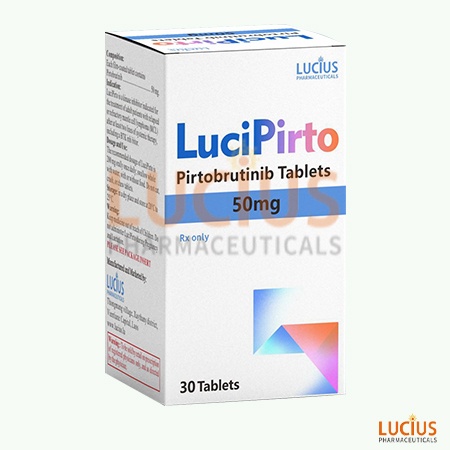
Pirtobrutinib is indicated for the treatment of adult patients with relapsed or refractory mantle cell lymphoma (MCL) who have received at least two prior systemic therapies, including a Bruton's tyrosine kinase (BTK) inhibitor.
The recommended dose is 200 mg orally once daily, which may be taken with or without food.
The most common adverse reactions (≥15%) in patients with mantle cell lymphoma are fatigue, musculoskeletal pain, diarrhea, edema, dyspnea, pneumonia, and bruising.
Grade 3 or 4 laboratory abnormalities (≥10%) include decreased neutrophil count, decreased lymphocyte count, and decreased platelet count.
InfectionsFatal and serious infections (including bacterial, viral, or fungal infections) as well as opportunistic infections have been reported in patients receiving pirtobrutinib. Prophylaxis should be considered for patients at increased risk of infections (including opportunistic infections), including vaccination and antibacterial prophylaxis. Monitor patients for signs and symptoms of infection, conduct timely evaluations, and administer appropriate treatment. Depending on the severity, reduce the dose, temporarily withhold, or permanently discontinue pirtobrutinib.
BleedingFatal and severe bleeding events may occur with pirtobrutinib use. Weigh the risks and benefits of concomitant use with antithrombotic agents. Monitor patients for signs of bleeding. Depending on the severity of bleeding, reduce the dose, temporarily withhold, or permanently discontinue pirtobrutinib. Based on the type of surgery and bleeding risk, evaluate the benefits and risks of withholding pirtobrutinib for 3–7 days before and after surgery.
CytopeniasGrade 3 or 4 cytopenias, including neutropenia, anemia, and thrombocytopenia, have been observed in patients receiving pirtobrutinib. Monitor complete blood counts regularly during treatment. Depending on the severity, reduce the dose, temporarily withhold, or permanently discontinue pirtobrutinib.
Atrial Fibrillation and Atrial FlutterAtrial fibrillation and atrial flutter have been reported in recipients of pirtobrutinib. Monitor for signs and symptoms of arrhythmias (e.g., palpitations, dizziness, syncope, dyspnea) and manage appropriately. Depending on the severity, reduce the dose, temporarily withhold, or permanently discontinue pirtobrutinib.
Second Primary MalignanciesDevelopment of malignancies has been reported in patients treated with pirtobrutinib monotherapy, with non-melanoma skin cancer being the most common. Advise patients to use sunscreen and monitor for the development of second primary malignancies.
Embryo-Fetal ToxicityInform pregnant women of the potential risk to the fetus. Advise females of reproductive potential to use effective contraception during treatment with pirtobrutinib and for one week after the last dose.
Strong CYP3A Inhibitors: Pirtobrutinib is a CYP3A substrate. Concomitant use with strong CYP3A inhibitors increases the systemic exposure of pirtobrutinib, which may elevate the risk of adverse reactions. Examples of strong CYP3A inhibitors include itraconazole (broad-spectrum antifungal), ketoconazole (broad-spectrum antifungal), voriconazole (broad-spectrum antifungal), atazanavir (anti-HIV), ritonavir (antiviral), and clarithromycin (antibiotic). If concomitant use cannot be avoided, reduce the dose of pirtobrutinib as appropriate.
Strong or Moderate CYP3A Inducers: Concomitant use with strong or moderate CYP3A inducers decreases the systemic exposure of pirtobrutinib, which may reduce its efficacy. Examples of strong CYP3A inducers include rifampicin (anti-tuberculosis), rifapentine (anti-tuberculosis, anti-leprosy, anti-Staphylococcus aureus), phenytoin (anti-epileptic, anti-arrhythmic, for trigeminal neuralgia), carbamazepine (anti-epileptic, for trigeminal neuralgia), barbiturates (central nervous system depressant, anti-convulsant, anti-epileptic), and St. John's Wort (for depression, anxiety, irritability, insomnia). If concomitant use cannot be avoided, increase the dose of pirtobrutinib as appropriate.
Sensitive Substrates of CYP2C8, CYP2C19, CYP3A, P-gp, or BCRP: Pirtobrutinib is an inhibitor of P-gp, a moderate inhibitor of CYP2C8 and BCRP, and a weak inhibitor of CYP2C19 and CYP3A. Concomitant use with sensitive substrates of P-gp, CYP2C8, BCRP, CYP2C19, or CYP3A increases their plasma concentrations, which may raise the risk of adverse reactions associated with these substrates (especially for drugs sensitive to minimal concentration changes). Follow the recommendations provided in the approved product labeling for sensitive substrates of CYP2C8, CYP2C19, CYP3A, P-gp, or BCRP.
Not yet established.
Tablets
Store at 20°C to 25°C (68°F to 77°F); short-term transportation is permitted at a temperature range of 15°C to 30°C (59°F to 86°F).
On November 21, 2025, the U.S. Food and Drug Administration (FDA) approved the regimen of pembrolizu···【more】
Recommended:[list:visits]2025-17-12
Lung cancer is the most rapidly increasing malignant tumor with the fastest increasing morbidity and···【more】
Recommended:[list:visits]2024-09-07
Lucius Pharmaceuticals Version of Vibegron Now Available1.Basic Drug InformationVibegron (generic na···【more】
Recommended:[list:visits]2026-06-08
In recent years, leveraging the World Trade Organization (WTO) patent waiver for least-developed cou···【more】
Recommended:[list:visits]2026-05-08
How Can Chinese Patients Access Generic Drugs from Laos?In recent years, generic drugs from Laos hav···【more】
Recommended:[list:visits]2026-04-08
Lucius Pharmaceuticals version of Ibrutinib is now availableIn a randomized controlled trial of 269 ···【more】
Recommended:[list:visits]2026-03-08
Leveraging the WTO patent waiver for least-developed countries (extended to 2033), Laos has seen rap···【more】
Recommended:[list:visits]2026-31-07
Alectinib Has Been Launched in LaosAlectinib is an oral targeted therapeutic drug belonging to the c···【more】
Recommended:[list:visits]2026-30-07
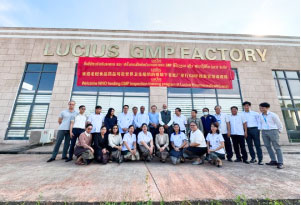
Lucius Pharmaceuticals (Lao) LTD. (Lucius Pharmaceuticals), with its manufacturing campus in Laos located in the capital city of Vientiane in 2020, officially begins its great journey to make effective and affordable medicines available to people in need around the world...More

Lucius Pharmaceutical Co., Ltd., was established in 2020 in Vientiane, the capital of Laos. It aims to offer safe, effective, and affordable medicines globally. With a factory spanning 25,000 square meters, the company manufactures 200+ generic drugs in diverse therapeutic fields.
Address: No.26 Thongmang village, Xaythany district, Vientiane Capital, Laos
E-mail:laoslucius@gmail.com

Name: Lucius

Telegram name: Vira
No.:0085253923643
Telegram name: Vira
No.:0085253923643