Your Health, We Care
Release date: 2025-12-16 15:17:25 Article From: Lucius Laos Recommended: 307
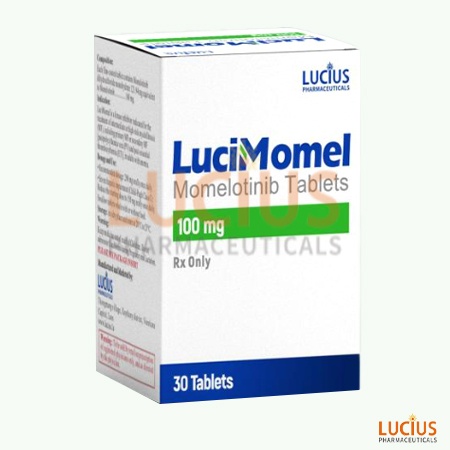
Momelotinib is indicated for the treatment of adult patients with anemia associated with intermediate- or high-risk myelofibrosis (MF), including primary myelofibrosis or secondary myelofibrosis [polycythemia vera (PV) and essential thrombocythemia (ET)].
The recommended dose is 200 mg orally once daily, which may be taken with or without food.
Severe hepatic impairment (Child-Pugh Class C): Reduce the initial dose to 150 mg orally once daily.
PregnancyAvailable data on the use of momelotinib in pregnant women are insufficient to determine whether there is a drug-associated risk of major birth defects or miscarriage. Based on animal reproductive studies, momelotinib may cause embryo-fetal toxicity at exposures lower than those expected in patients receiving 200 mg once daily. Momelotinib should be used during pregnancy only if the potential benefit to the mother outweighs the potential risk to the fetus.
LactationThere are no data on the presence of momelotinib or its metabolites in human milk, the effects on the breastfed child, or the effects on milk production. It is unknown whether momelotinib is excreted in human milk. Momelotinib was present in the milk of treated female rats, and adverse effects were observed in their offspring. When a drug is present in animal milk, it may also be present in human milk. Because of the potential for serious adverse reactions in breastfed children, patients should not breastfeed during treatment with momelotinib and for at least 1 week after the last dose.
Females and Males of Reproductive PotentialAdvise females of reproductive potential who are not pregnant to use effective contraception during treatment with momelotinib and for at least 1 week after the last dose.
Pediatric UseThe safety and effectiveness of momelotinib in pediatric patients have not been established.
Geriatric UseIn clinical studies of MF, 275 patients aged 65 years and older were enrolled. Of the total number of patients treated with momelotinib in these studies, 163/216 (75%) were aged 65 years and older, and 63/216 (29%) were aged 75 years and older. No overall differences in the safety or effectiveness of momelotinib were observed between patients aged 65 years and older and younger adult patients.
Hepatic ImpairmentThe recommended initial dose for patients with severe hepatic impairment (Child-Pugh Class C) is 150 mg orally once daily. No dose adjustment is recommended for patients with mild (Child-Pugh Class A) or moderate (Child-Pugh Class B) hepatic impairment. Momelotinib is extensively metabolized. Exposure to momelotinib is increased in patients with severe hepatic impairment (Child-Pugh Class C). No clinically significant changes in momelotinib exposure were observed in subjects with mild (Child-Pugh Class A) or moderate (Child-Pugh Class B) hepatic impairment.
Momelotinib may cause serious side effects, including:
Risk of InfectionsPeople taking momelotinib may develop serious, life-threatening infections such as bacterial and viral infections, including COVID-19. You should not start treatment with momelotinib if you have an active infection until the infection resolves. If you have long-term (chronic) hepatitis B, momelotinib may cause your hepatitis B to become active again. Your doctor will check your blood for active hepatitis B virus before starting treatment. Your doctor will monitor you and treat any infections that occur during treatment with momelotinib. Tell your doctor right away if you have any signs of infection, including: fever; diarrhea; chills; vomiting; cough; pain or burning sensation when urinating; trouble breathing.
Low Platelet and White Blood Cell CountsMomelotinib may cause new or worsening low platelet and white blood cell counts. Low platelet counts may increase the risk of bleeding, and low white blood cell counts may increase the risk of infection. Your doctor will perform blood tests to check your blood cell counts before you start taking momelotinib and during treatment. Tell your doctor right away if you have any signs of bleeding during treatment with momelotinib, including: unusual bleeding; bruising; black or tarry stools.
Liver ProblemsMomelotinib may cause new or worsening increases in liver enzymes and bilirubin. Your doctor will check your liver enzymes before starting treatment, every month for the first 6 months of treatment, and as needed during treatment with momelotinib. If your liver enzymes are elevated, your doctor may stop treatment with momelotinib. Tell your doctor if you have any signs or symptoms of liver problems, including: tiredness; dark urine; loss of appetite; yellowing of your skin or the whites of your eyes; pain in the upper right part of your abdomen.
Serious Cardiovascular Events, Such as Heart Attack, Stroke, and DeathMajor cardiac events have occurred, particularly in people with cardiac risk factors, current or past smokers, and patients taking another Janus kinase (JAK) inhibitor for rheumatoid arthritis. Momelotinib is in the JAK inhibitor class of medicines. Get medical help right away if you have any symptoms of a heart attack or stroke during treatment with momelotinib, including: chest discomfort lasting more than a few minutes, or that goes away and comes back; severe tightness, pain, pressure, or heaviness in your chest, throat, neck, or jaw; pain or discomfort in one or both arms, your back, neck, jaw, or stomach; shortness of breath with or without chest discomfort; breaking out in a cold sweat; nausea or vomiting; feeling dizzy or lightheaded; weakness in one part or one side of your body; slurred speech.
Blood ClotsBlood clots in the veins of the legs (deep vein thrombosis, DVT) or lungs (pulmonary embolism, PE), which can be life-threatening, have occurred in some people taking another JAK inhibitor for rheumatoid arthritis. Tell your doctor if you have ever had a blood clot in the veins of your legs or lungs in the past. Tell your doctor right away if you have any signs or symptoms of a blood clot during treatment with momelotinib, including: swelling, pain, or tenderness in one or both legs; sudden, unexplained chest pain; shortness of breath or difficulty breathing.
CancerSome people taking another JAK inhibitor for rheumatoid arthritis have developed new cancers, including lymphoma and other cancers except non-melanoma skin cancer. The risk of developing new cancers is further increased in people who smoke or have smoked in the past.
The most common side effects of momelotinib include: low platelet count; dizziness; bleeding; diarrhea; bacterial infections; nausea.
Risk of InfectionsSevere (including fatal) infections (such as bacterial and viral infections, including COVID-19) occurred in 13% of patients treated with momelotinib. Infections occurred in 38% of patients treated with momelotinib. Delay the start of momelotinib treatment until active infections resolve. Monitor patients receiving momelotinib for signs and symptoms of infection and initiate appropriate treatment promptly.Hepatitis B Reactivation: Increases in hepatitis B virus (HBV) load (HBV-DNA titer), with or without elevations in alanine aminotransferase (ALT) or aspartate aminotransferase (AST), have been reported in patients with chronic hepatitis B virus (HBV) infection taking JAK inhibitors, including momelotinib. The effect of momelotinib on viral replication in patients with chronic HBV infection is unknown. For patients with HBV infection, test hepatitis B serology before starting momelotinib. If HBsAg and/or anti-HBc antibodies are positive, consider consulting a hepatologist to monitor for reactivation and for prophylactic hepatitis B treatment. Patients with chronic HBV infection receiving momelotinib should be managed and monitored for their chronic HBV infection according to clinical guidelines for HBV.
Thrombocytopenia and NeutropeniaMomelotinib can cause thrombocytopenia and neutropenia. New or worsening thrombocytopenia (platelet count < 50 × 10⁹/L) occurred in 20% of patients treated with momelotinib. Baseline platelet count < 50 × 10⁹/L was reported in 8% of patients treated with momelotinib. Severe neutropenia (absolute neutrophil count [ANC] < 0.5 × 10⁹/L) was observed in 2% of patients treated with momelotinib. Perform complete blood count (CBC), including platelet and neutrophil counts, regularly before starting treatment and during treatment as clinically indicated. Interrupt dosing or reduce the dose for thrombocytopenia or neutropenia.
HepatotoxicityReversible drug-induced liver injury occurred in 2 of 993 MF patients who received at least one dose of momelotinib in clinical trials. Overall, new or worsening elevations in ALT and AST (all grades) occurred in 23% and 24% of patients treated with momelotinib, respectively; grade 3 and 4 transaminase elevations occurred in 1% and 0.5% of patients, respectively. New or worsening elevations in total bilirubin occurred in 16% of patients treated with momelotinib. All total bilirubin elevations were grade 1-2. The median time to onset of transaminase elevations of any grade was 2 months, with 75% of cases occurring within 4 months. Delay the start of treatment in patients with uncontrolled acute or chronic liver disease until a clear cause has been investigated and treated as clinically indicated. Monitor liver function tests at baseline, monthly for the first 6 months of treatment, and periodically as clinically indicated during treatment. If treatment-related elevations in ALT, AST, or bilirubin are suspected, modify the dose of momelotinib according to Table 1.
Major Adverse Cardiovascular Events (MACE)Another JAK inhibitor increased the risk of MACE, including cardiovascular death, myocardial infarction, and stroke, in patients with rheumatoid arthritis (compared to patients treated with tumor necrosis factor [TNF] blockers). Before initiating or continuing treatment with momelotinib, consider the individual benefits and risks for the patient, particularly for current or past smokers and patients with other cardiovascular risk factors. Inform patients receiving momelotinib of the symptoms of serious cardiovascular events and the actions to take if these symptoms occur.
ThrombosisAnother JAK inhibitor increased the risk of thrombosis, including deep vein thrombosis, pulmonary embolism, and arterial thrombosis, in patients with rheumatoid arthritis (compared to patients treated with TNF blockers), a disease for which momelotinib is not indicated. Evaluate patients with symptoms of thrombosis and treat appropriately.
MalignanciesAnother JAK inhibitor increased the risk of lymphoma and other malignancies except non-melanoma skin cancer (NMSC) in patients with rheumatoid arthritis (compared to patients treated with TNF blockers). The risk is higher in current or past smokers. Before initiating or continuing treatment with momelotinib, consider the individual benefits and risks for the patient, especially for patients with known malignancies (except successfully treated NMSC), patients who develop malignancies, and current or past smokers.
Organic Anion Transporting Polypeptide (OATP) 1B1/B3 InhibitorsMomelotinib is a substrate of OATP1B1/B3. Concomitant use with OATP1B1/B3 inhibitors increases the maximum concentration (Cmax) and area under the concentration-time curve (AUC) of momelotinib, which may increase the risk of momelotinib adverse reactions. Monitor patients receiving concomitant OATP1B1/B3 inhibitors for adverse reactions and consider adjusting the dose of momelotinib.
Breast Cancer Resistance Protein (BCRP) SubstratesMomelotinib is a BCRP inhibitor. Momelotinib may increase the exposure of BCRP substrates, which may increase the risk of adverse reactions associated with BCRP substrates. When administered concomitantly with momelotinib, start rosuvastatin (a BCRP substrate) at 5 mg and do not increase the dose to more than 10 mg once daily. Dose adjustment may also be required for other BCRP substrates. Follow the approved product labeling for other BCRP substrates.
Not yet established.
Tablets
Store at 20°C to 25°C (68°F to 77°F); short-term transportation is permitted at a temperature range of 15°C to 30°C (59°F to 86°F).
On November 21, 2025, the U.S. Food and Drug Administration (FDA) approved the regimen of pembrolizu···【more】
Recommended:[list:visits]2025-17-12
Lung cancer is the most rapidly increasing malignant tumor with the fastest increasing morbidity and···【more】
Recommended:[list:visits]2024-09-07
Lucius Pharmaceuticals Version of Vibegron Now Available1.Basic Drug InformationVibegron (generic na···【more】
Recommended:[list:visits]2026-06-08
In recent years, leveraging the World Trade Organization (WTO) patent waiver for least-developed cou···【more】
Recommended:[list:visits]2026-05-08
How Can Chinese Patients Access Generic Drugs from Laos?In recent years, generic drugs from Laos hav···【more】
Recommended:[list:visits]2026-04-08
Lucius Pharmaceuticals version of Ibrutinib is now availableIn a randomized controlled trial of 269 ···【more】
Recommended:[list:visits]2026-03-08
Leveraging the WTO patent waiver for least-developed countries (extended to 2033), Laos has seen rap···【more】
Recommended:[list:visits]2026-31-07
Alectinib Has Been Launched in LaosAlectinib is an oral targeted therapeutic drug belonging to the c···【more】
Recommended:[list:visits]2026-30-07

Lucius Pharmaceuticals (Lao) LTD. (Lucius Pharmaceuticals), with its manufacturing campus in Laos located in the capital city of Vientiane in 2020, officially begins its great journey to make effective and affordable medicines available to people in need around the world...More

Lucius Pharmaceutical Co., Ltd., was established in 2020 in Vientiane, the capital of Laos. It aims to offer safe, effective, and affordable medicines globally. With a factory spanning 25,000 square meters, the company manufactures 200+ generic drugs in diverse therapeutic fields.
Address: No.26 Thongmang village, Xaythany district, Vientiane Capital, Laos
E-mail:laoslucius@gmail.com

Name: Lucius

Telegram name: Vira
No.:0085253923643
Telegram name: Vira
No.:0085253923643