Your Health, We Care
Release date: 2026-01-23 14:58:48 Article From: Lucius Laos Recommended: 284
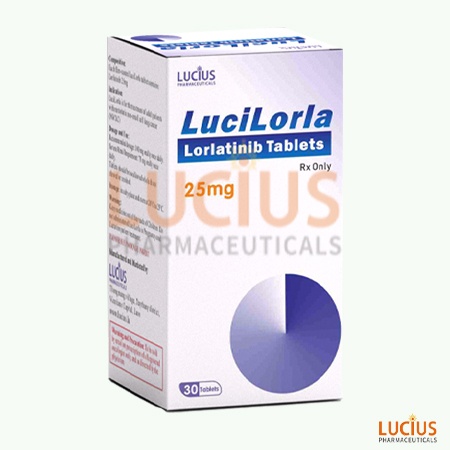
In December 2020, the U.S. Food and Drug Administration (FDA) accepted a supplemental New Drug Application (sNDA) for Lorbrena (lorlatinib) for the first-line treatment of patients with anaplastic lymphoma kinase (ALK)-positive metastatic non-small cell lung cancer (NSCLC).
Data from the study demonstrated that compared with crizotinib, treatment with lorlatinib significantly reduced the risk of disease progression or death by 72% (hazard ratio [HR] = 0.28, p < 0.001), while also yielding a marked improvement in intracranial response rates (objective response rate [ORR]: 82% vs. 23%; complete response rate [CR]: 71% vs. 8%).
Regarding secondary endpoints, overall survival (OS) data were immature at the time of the interim analysis. In terms of ORR, the Lorbrena group achieved 76% (95% confidence interval [CI]: 68–83) versus 58% (95% CI: 49–66) in the Xalkori group. In addition, Lorbrena exhibited enhanced intracranial activity compared with Xalkori: at the 12-month mark, 96% of patients in the Lorbrena group (95% CI: 91–98) had no central nervous system (CNS) progression, versus 60% in the Xalkori group (95% CI: 0.49–0.69). Among patients with brain metastases (n = 30), the intracranial ORR was 82% in the Lorbrena group (95% CI: 0.57–0.96; n = 14) versus 23% in the Xalkori group (95% CI: 0.05–0.54; n = 3), with intracranial complete response rates (CRR) of 71% and 8%, respectively.
In this study, adverse events (AEs) occurring in more than 20% of patients in the Lorbrena group included hypercholesterolemia (70%), hypertriglyceridemia (64%), edema (55%), weight gain (38%), peripheral neuropathy (34%), cognitive dysfunction (21%), and diarrhea (21%). Grade 3 or 4 AEs were reported in 72% of patients in the Lorbrena group and 56% of those in the Xalkori group. The most common Grade 3 or 4 AEs in the Lorbrena group were hypertriglyceridemia (20%), weight gain (17%), hypercholesterolemia (16%), and hypertension (10%). Adverse events leading to permanent treatment discontinuation occurred in 7% of patients in the Lorbrena group and 9% of those in the Xalkori group.
The above is the latest update on Lorbrena (lorlatinib) for first-line NSCLC treatment: 72% significant reduction in the risk of disease progression or death. For more information about Lorbrena (lorlatinib), please contact our pharmacist consultants directly.
On November 21, 2025, the U.S. Food and Drug Administration (FDA) approved the regimen of pembrolizu···【more】
Recommended:[list:visits]2025-17-12
Lung cancer is the most rapidly increasing malignant tumor with the fastest increasing morbidity and···【more】
Recommended:[list:visits]2024-09-07
Lucius Pharmaceuticals Version of Vibegron Now Available1.Basic Drug InformationVibegron (generic na···【more】
Recommended:[list:visits]2026-06-08
In recent years, leveraging the World Trade Organization (WTO) patent waiver for least-developed cou···【more】
Recommended:[list:visits]2026-05-08
How Can Chinese Patients Access Generic Drugs from Laos?In recent years, generic drugs from Laos hav···【more】
Recommended:[list:visits]2026-04-08
Lucius Pharmaceuticals version of Ibrutinib is now availableIn a randomized controlled trial of 269 ···【more】
Recommended:[list:visits]2026-03-08
Leveraging the WTO patent waiver for least-developed countries (extended to 2033), Laos has seen rap···【more】
Recommended:[list:visits]2026-31-07
Alectinib Has Been Launched in LaosAlectinib is an oral targeted therapeutic drug belonging to the c···【more】
Recommended:[list:visits]2026-30-07
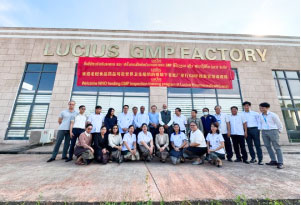
Lucius Pharmaceuticals (Lao) LTD. (Lucius Pharmaceuticals), with its manufacturing campus in Laos located in the capital city of Vientiane in 2020, officially begins its great journey to make effective and affordable medicines available to people in need around the world...More

Lucius Pharmaceutical Co., Ltd., was established in 2020 in Vientiane, the capital of Laos. It aims to offer safe, effective, and affordable medicines globally. With a factory spanning 25,000 square meters, the company manufactures 200+ generic drugs in diverse therapeutic fields.
Address: No.26 Thongmang village, Xaythany district, Vientiane Capital, Laos
E-mail:laoslucius@gmail.com

Name: Lucius

Telegram name: Vira
No.:0085253923643
Telegram name: Vira
No.:0085253923643