Your Health, We Care
Release date: 2025-12-10 16:33:30 Article From: Lucius Laos Recommended: 313
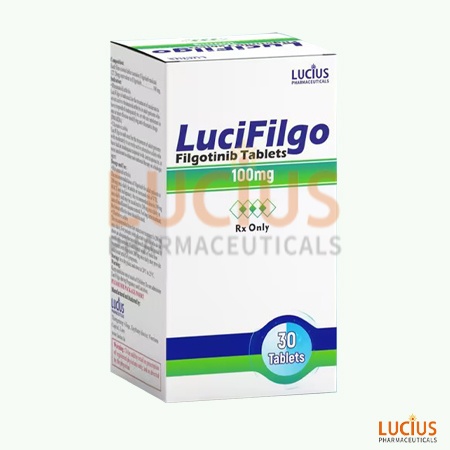
LuciFilgo is indicated for the treatment of adult patients with moderately to severely active rheumatoid arthritis who have had an inadequate response to or intolerance of one or more disease-modifying antirheumatic drugs (DMARDs). LuciFilgo can be used as monotherapy or in combination with methotrexate (MTX).
LuciFilgo is indicated for the treatment of adult patients with moderately to severely active ulcerative colitis who have had an inadequate response, lost response, or are intolerant to conventional therapies or biologics.
Treatment with LuciFilgo should be under the guidance of a physician experienced in the treatment of rheumatoid arthritis or ulcerative colitis.
The recommended dose of LuciFilgo for adult patients with rheumatoid arthritis is 200 mg once daily. For adults at increased risk of venous thromboembolism (VTE), major adverse cardiovascular events (MACE), and malignancy, the recommended dose is 100 mg once daily; if disease control is inadequate, the dose may be increased to 200 mg once daily. For long-term treatment, the lowest effective dose should be used.
The recommended dose for induction therapy is 200 mg once daily. For patients with ulcerative colitis who do not show a sufficient therapeutic effect within the first 10 weeks of treatment, an additional 12 weeks of LuciFilgo induction therapy may further relieve symptoms. Patients who show no therapeutic effect after 22 weeks of treatment should discontinue LuciFilgo.
Women of childbearing potential must use effective contraception during treatment with LuciFilgo and for at least 1 week after discontinuation.
Data on the use of LuciFilgo in pregnant women are limited. Animal studies have demonstrated reproductive toxicity. Based on animal experimental results, LuciFilgo may cause harm to the fetus and is therefore contraindicated during pregnancy.
It is not known whether LuciFilgo is excreted into human breast milk. The risk to breastfed newborns/infants cannot be excluded. Therefore, LuciFilgo should not be used during breastfeeding.
LuciFilgo should only be used when no suitable alternative treatments are available for patients in the following groups:
Patients aged 65 years and above;
Patients with a history of atherosclerotic cardiovascular disease or other cardiovascular risk factors (e.g., current or past long-term smokers);
Patients with risk factors for malignancy (e.g., current malignancy or history of malignancy).
LuciFilgo is mainly metabolized by carboxylesterase 2 (CES2) and can be inhibited in vitro by drugs such as fenofibrate, carvedilol, diltiazem, or simvastatin. The clinical relevance of this interaction is unclear.
LuciFilgo is not a clinically relevant inhibitor or inducer of most enzymes or transporters typically involved in drug interactions, such as cytochrome P450 (CYP) enzymes and UDP-glucuronosyltransferases (UGT). In vitro studies on the potential of LuciFilgo to induce CYP2B6 are inconclusive, and induction cannot be ruled out.
In vitro studies on the potential of LuciFilgo to induce or inhibit CYP1A2 are inconclusive. No clinical studies have been conducted to investigate interactions with CYP1A2 substrates, so the potential in vivo effects of LuciFilgo to both induce and inhibit CYP1A2 are unknown. Caution is recommended when LuciFilgo is co-administered with CYP1A2 substrates with a narrow therapeutic index.
In a clinical pharmacology study, co-administration with LuciFilgo had no effect on the pharmacokinetics of the combined oral contraceptives containing ethinylestradiol and levonorgestrel; therefore, no adjustment of the oral contraceptive dose is required.
The most common adverse reactions of LuciFilgo in patients with rheumatoid arthritis are nausea (3.5%), upper respiratory tract infection (URTI, 3.3%), urinary tract infection (UTI, 1.7%), dizziness (1.2%), and lymphopenia (1.0%).
The overall safety profile observed in patients with ulcerative colitis treated with LuciFilgo is generally consistent with that observed in patients with rheumatoid arthritis.
None identified.
Tablets.
Store at 20°C to 25°C (68°F to 77°F); short-term transportation is permitted within a temperature range of 15°C to 30°C (59°F to 86°F).
On November 21, 2025, the U.S. Food and Drug Administration (FDA) approved the regimen of pembrolizu···【more】
Recommended:[list:visits]2025-17-12
Lung cancer is the most rapidly increasing malignant tumor with the fastest increasing morbidity and···【more】
Recommended:[list:visits]2024-09-07
Lucius Pharmaceuticals Version of Vibegron Now Available1.Basic Drug InformationVibegron (generic na···【more】
Recommended:[list:visits]2026-06-08
In recent years, leveraging the World Trade Organization (WTO) patent waiver for least-developed cou···【more】
Recommended:[list:visits]2026-05-08
How Can Chinese Patients Access Generic Drugs from Laos?In recent years, generic drugs from Laos hav···【more】
Recommended:[list:visits]2026-04-08
Lucius Pharmaceuticals version of Ibrutinib is now availableIn a randomized controlled trial of 269 ···【more】
Recommended:[list:visits]2026-03-08
Leveraging the WTO patent waiver for least-developed countries (extended to 2033), Laos has seen rap···【more】
Recommended:[list:visits]2026-31-07
Alectinib Has Been Launched in LaosAlectinib is an oral targeted therapeutic drug belonging to the c···【more】
Recommended:[list:visits]2026-30-07

Lucius Pharmaceuticals (Lao) LTD. (Lucius Pharmaceuticals), with its manufacturing campus in Laos located in the capital city of Vientiane in 2020, officially begins its great journey to make effective and affordable medicines available to people in need around the world...More

Lucius Pharmaceutical Co., Ltd., was established in 2020 in Vientiane, the capital of Laos. It aims to offer safe, effective, and affordable medicines globally. With a factory spanning 25,000 square meters, the company manufactures 200+ generic drugs in diverse therapeutic fields.
Address: No.26 Thongmang village, Xaythany district, Vientiane Capital, Laos
E-mail:laoslucius@gmail.com

Name: Lucius

Telegram name: Vira
No.:0085253923643
Telegram name: Vira
No.:0085253923643