Your Health, We Care
Release date: 2025-12-08 13:48:22 Article From: Lucius Laos Recommended: 283
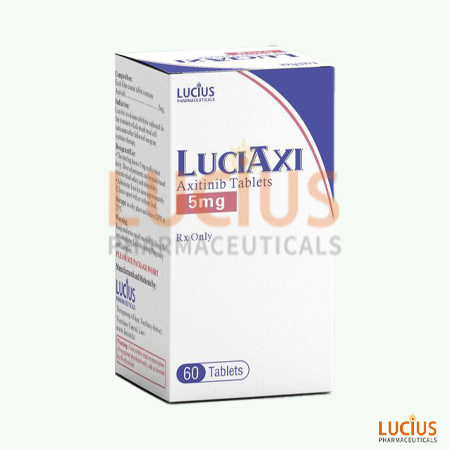
Axitinib is a kinase inhibitor indicated for the treatment of advanced renal cell carcinoma (RCC) after failure of one prior systemic therapy.
The recommended starting dose is 5 mg orally twice daily. Dosage adjustments may be made based on individual safety and tolerability.
May be taken with or without food, with doses administered approximately 12 hours apart.
Axitinib tablets should be swallowed whole; do not split, chew, or crush.
If coadministration with a strong CYP3A4/5 inhibitor is necessary, reduce the Axitinib dose by approximately half.
For patients with moderate hepatic impairment, reduce the starting dose by approximately half.
Based on animal studies and its mechanism of action, Axitinib (Inlyta) can cause fetal harm when administered to pregnant women. No human data are available to inform the drug-related risk.
In developmental toxicity studies, Axitinib (Inlyta) exhibited teratogenicity, embryotoxicity, and fetotoxicity in animals at exposures below human exposures at the recommended starting dose.
Inform females of reproductive potential of the potential reproductive risks and potential risk to the fetus.
There are no data on the presence of axitinib in human milk or its effects on breastfed infants or milk production.
Due to the potential for serious adverse reactions in breastfed children, advise lactating women not to breastfeed during treatment with Axitinib (Inlyta) and for 2 weeks after the last dose.
Based on animal studies, Axitinib (Inlyta) can cause fetal harm when administered to pregnant women.
When Axitinib (Inlyta) is used in combination with avelumab or pembrolizumab, refer to the full prescribing information for avelumab or pembrolizumab for contraception recommendations.
Verify the pregnancy status of females of reproductive potential prior to initiating Axitinib (Inlyta) treatment.
Advise females of reproductive potential to use effective contraception during treatment with Axitinib (Inlyta) and for 1 week after the last dose.
Based on animal studies, advise male partners of females of reproductive potential to use effective contraception during treatment and for 1 week after the last dose.
Animal studies indicate that Axitinib may impair fertility in females and males of reproductive potential.
The safety and effectiveness of Axitinib (Inlyta) in pediatric patients have not been established.
In a controlled clinical study of Axitinib in patients with RCC, 123 out of 359 patients (34%) treated with Axitinib were ≥65 years of age.
No overall differences in safety or effectiveness of Axitinib were observed between patients ≥65 years of age and younger patients, although greater sensitivity in some older individuals cannot be ruled out. No dosage adjustment is required for geriatric patients.
In a dedicated hepatic impairment study, systemic exposure following a single dose of Axitinib was similar in subjects with baseline mild hepatic impairment (Child-Pugh Class A) compared to subjects with normal hepatic function, while systemic exposure was higher in subjects with baseline moderate hepatic impairment (Child-Pugh Class B).
No dosage adjustment is required for patients with mild hepatic impairment (Child-Pugh Class A). For patients with moderate hepatic impairment (Child-Pugh Class B), a reduced starting dose is recommended.
Axitinib has not been studied in subjects with severe hepatic impairment (Child-Pugh Class C).
No dedicated renal impairment study has been conducted with Axitinib.
Population pharmacokinetic analysis showed no significant difference in Axitinib clearance in patients with pre-existing mild to severe renal impairment (creatinine clearance [CLcr] 15 mL/min ≤ CLcr < 89 mL/min). No dosage adjustment is required for patients with pre-existing mild to severe renal impairment.
Use with caution in patients with end-stage renal disease (CLcr < 15 mL/min).
Hypertension: Hypertension, including hypertensive crisis, has been observed. Control blood pressure prior to initiating Axitinib. Monitor blood pressure and treat as needed. Reduce Axitinib dose in patients with persistent hypertension despite use of antihypertensive medications.
Thromboembolic Events: Arterial and venous thromboembolic events, which can be fatal, have been observed. Use with caution in patients at increased risk for these events.
Bleeding Events: Bleeding events, including fatal events, have been reported. Axitinib has not been studied in patients with brain metastases or recent active gastrointestinal bleeding, and there is insufficient evidence to support its use in these patients; therefore, do not use in these patients.
Gastrointestinal Perforation and Fistulae: Gastrointestinal perforation and fistulae, including fatal events, have occurred. Use with caution in patients at risk for gastrointestinal perforation or fistulae.
Hypothyroidism: Hypothyroidism requiring thyroid hormone replacement has been reported. Monitor thyroid function prior to initiating treatment and periodically throughout treatment.
Surgery: Discontinue Axitinib at least 24 hours prior to scheduled surgery.
Reversible Posterior Leukoencephalopathy Syndrome (RPLS): RPLS has been observed. Permanently discontinue Axitinib if signs or symptoms of RPLS occur.
Proteinuria: Monitor for proteinuria prior to initiating treatment and periodically throughout treatment. Reduce dose or temporarily interrupt Axitinib for moderate to severe proteinuria.
Elevated Liver Enzymes: Elevations in liver enzymes have been observed during treatment with Axitinib. Monitor ALT, AST, and bilirubin prior to initiating treatment and periodically throughout treatment.
Hepatic Impairment: A reduced starting dose is recommended for patients with moderate hepatic impairment. Axitinib has not been studied in patients with severe hepatic impairment.
Fetal Risk: Based on its mechanism of action, Axitinib may cause fetal harm when administered to pregnant women. Inform females of reproductive potential of the potential risk to the fetus and advise against pregnancy.
Coadministration with ketoconazole (a strong CYP3A4/5 inhibitor) increased Axitinib plasma exposure in healthy volunteers.
Avoid coadministration of Axitinib with strong CYP3A4/5 inhibitors. Grapefruit or grapefruit juice may also increase axitinib plasma concentrations and should be avoided.
Select concomitant medications with no or minimal CYP3A4/5 inhibitory potential. If coadministration with a strong CYP3A4/5 inhibitor is unavoidable, reduce the dose of Axitinib (Inlyta).
Coadministration with rifampin (a strong CYP3A4/5 inducer) decreased Axitinib plasma exposure in healthy volunteers.
Avoid coadministration of Axitinib with strong CYP3A4/5 inducers (e.g., rifampin, dexamethasone, phenytoin, carbamazepine, rifabutin, rifapentine, phenobarbital, St. John's Wort). Select concomitant medications with no or minimal CYP3A4/5 inductive potential.
Moderate CYP3A4/5 inducers (e.g., bosentan, efavirenz, etravirine, modafinil, nafcillin) may also decrease Axitinib plasma exposure and should be avoided if possible.
There is no specific treatment for Axitinib overdosage.
In a controlled clinical study of Axitinib in patients with RCC, one patient inadvertently received 20 mg twice daily for 4 days and experienced dizziness (Grade 1).
In clinical dose-finding studies of Axitinib, adverse reactions including hypertension, hypertension-related seizures, and fatal hemoptysis occurred in subjects who received starting doses of 10 mg twice daily or 20 mg twice daily.
In case of suspected overdosage, discontinue Axitinib and initiate supportive care.
The most common adverse reactions (≥20%) are: diarrhea, hypertension, fatigue, decreased appetite, nausea, dysphonia, palmar-plantar erythrodysesthesia (hand-foot) syndrome, weight loss, vomiting, asthenia, and constipation.
None specified.
axitinib.
Microcrystalline cellulose, lactose monohydrate, croscarmellose sodium, magnesium stearate, Opadry II Red 32K15441.
Opadry II Red 32K15441 film coating contains: lactose monohydrate, HPMC 2910/hypromellose 15cP, titanium dioxide, triacetin (glyceryl triacetate), and red iron oxide.
Tablets.
Store Axitinib at room temperature between 20°C and 25°C (68°F and 77°F).
Excursions are permitted between 15°C and 30°C (59°F and 86°F) for short-term transport.
Keep Axitinib and all medications out of the reach of children.
On November 21, 2025, the U.S. Food and Drug Administration (FDA) approved the regimen of pembrolizu···【more】
Recommended:[list:visits]2025-17-12
Lung cancer is the most rapidly increasing malignant tumor with the fastest increasing morbidity and···【more】
Recommended:[list:visits]2024-09-07
Lucius Pharmaceuticals Version of Vibegron Now Available1.Basic Drug InformationVibegron (generic na···【more】
Recommended:[list:visits]2026-06-08
In recent years, leveraging the World Trade Organization (WTO) patent waiver for least-developed cou···【more】
Recommended:[list:visits]2026-05-08
How Can Chinese Patients Access Generic Drugs from Laos?In recent years, generic drugs from Laos hav···【more】
Recommended:[list:visits]2026-04-08
Lucius Pharmaceuticals version of Ibrutinib is now availableIn a randomized controlled trial of 269 ···【more】
Recommended:[list:visits]2026-03-08
Leveraging the WTO patent waiver for least-developed countries (extended to 2033), Laos has seen rap···【more】
Recommended:[list:visits]2026-31-07
Alectinib Has Been Launched in LaosAlectinib is an oral targeted therapeutic drug belonging to the c···【more】
Recommended:[list:visits]2026-30-07

Lucius Pharmaceuticals (Lao) LTD. (Lucius Pharmaceuticals), with its manufacturing campus in Laos located in the capital city of Vientiane in 2020, officially begins its great journey to make effective and affordable medicines available to people in need around the world...More

Lucius Pharmaceutical Co., Ltd., was established in 2020 in Vientiane, the capital of Laos. It aims to offer safe, effective, and affordable medicines globally. With a factory spanning 25,000 square meters, the company manufactures 200+ generic drugs in diverse therapeutic fields.
Address: No.26 Thongmang village, Xaythany district, Vientiane Capital, Laos
E-mail:laoslucius@gmail.com

Name: Lucius

Telegram name: Vira
No.:0085253923643
Telegram name: Vira
No.:0085253923643