Your Health, We Care
Release date: 2025-12-11 17:16:22 Article From: Lucius Laos Recommended: 304
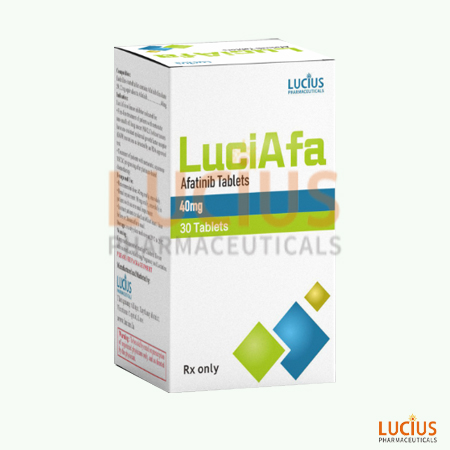
Afatinib is a kinase inhibitor indicated for:
First-line treatment of patients with metastatic non-small cell lung cancer (NSCLC) whose tumors have non-resistant epidermal growth factor receptor (EGFR) mutations as detected by an FDA-approved test.
Usage Limitation: The safety and efficacy of afatinib in patients with tumors harboring resistant EGFR mutations have not been established.
Treatment of patients with metastatic squamous NSCLC who have progressed after platinum-based chemotherapy.
Recommended Dose: 40 mg orally, once daily.
Renal Impairment: For patients with severe renal impairment, the dose is 30 mg orally once daily.
Instruct patients to take afatinib at least 1 hour before or 2 hours after meals.
Based on in vitro data, afatinib is a substrate of P-gp. Clinical data indicate that concomitant use with P-gp inhibitors or inducers may alter afatinib exposure.
Results from drug interaction studies confirm that P-gp inhibitors (e.g., ritonavir) can be safely co-administered with this product either concomitantly or after administration of this product.
If administered prior to this product, strong P-gp inhibitors (including but not limited to ritonavir, cyclosporine A, ketoconazole, itraconazole, erythromycin, verapamil, quinidine, tacrolimus, nelfinavir, saquinavir, and amiodarone) may increase afatinib exposure and should be used with caution (see [Dosage and Administration], [Precautions], and [Pharmacokinetics]).
Strong P-gp inducers (including but not limited to rifampicin, carbamazepine, phenytoin, phenobarbital, or St. John’s Wort) may decrease afatinib exposure (see [Precautions] and [Pharmacokinetics]).
Co-administration of this product with a high-fat meal results in a significant reduction in afatinib exposure, with a approximately 50% decrease in Cmax and a approximately 39% decrease in AUC0-∞. This product should not be taken with food (see [Dosage and Administration] and [Pharmacokinetics]).
In phase I clinical trials, the highest doses of this product studied in a limited number of patients were 160 mg once daily for 3 consecutive days and 100 mg once daily for 2 consecutive weeks. Adverse reactions at these doses were mainly dermatological (rash/acne) and gastrointestinal events (especially diarrhea).
Two healthy adolescents who each ingested 360 mg of afatinib (as part of a mixed medication intake) experienced overdose-related adverse reactions including nausea, vomiting, fatigue, dizziness, headache, abdominal pain, and elevated amylase (<1.5 times the upper limit of normal [ULN]). Both subjects recovered from these adverse events.
There is no specific antidote for afatinib overdosage. When overdose is suspected, administration of this product should be discontinued and supportive care initiated. If indicated, unabsorbed afatinib may be removed by emesis or gastric lavage.
Diarrhea: Diarrhea may lead to dehydration and renal failure. For severe and prolonged diarrhea unresponsive to antidiarrheal medications, hold afatinib.
Bullous and Exfoliative Dermatological Disorders: Severe bullous, blistering, and exfoliative lesions occurred in 0.2% of patients. Discontinue afatinib for life-threatening skin reactions. Withhold afatinib for severe and prolonged skin reactions.
Interstitial Lung Disease (ILD): Occurred in 1.6% of patients. Withhold afatinib in patients with acute onset or worsening of pulmonary symptoms. Discontinue afatinib if ILD is diagnosed.
Hepatotoxicity: Fatal hepatic injury occurred in 0.2% of patients. Perform regular liver function tests. Hold or discontinue afatinib if worsening liver disease is detected.
Gastrointestinal Perforation: Occurred in 0.2% of patients. Permanently discontinue afatinib in patients who develop gastrointestinal perforation.
Keratitis: Occurred in 0.7% of patients. Hold afatinib for evaluation of keratitis. Withhold or discontinue afatinib for confirmed ulcerative keratitis.
Embryo-Fetal Toxicity: May cause fetal harm when administered to pregnant women. Advise pregnant women and females of reproductive potential of the potential risk to the fetus and to use effective contraception.
The most common adverse reactions (≥20%) are diarrhea, rash/acneiform dermatitis, stomatitis, paronychia, dry skin, decreased appetite, nausea, vomiting, and pruritus.
None identified.
Tablets
Store at 20°C to 25°C (68°F to 77°F); short-term storage is permitted at 15°C to 30°C (59°F to 86°F) for transportation.
On November 21, 2025, the U.S. Food and Drug Administration (FDA) approved the regimen of pembrolizu···【more】
Recommended:[list:visits]2025-17-12
Lung cancer is the most rapidly increasing malignant tumor with the fastest increasing morbidity and···【more】
Recommended:[list:visits]2024-09-07
Lucius Pharmaceuticals Version of Vibegron Now Available1.Basic Drug InformationVibegron (generic na···【more】
Recommended:[list:visits]2026-06-08
In recent years, leveraging the World Trade Organization (WTO) patent waiver for least-developed cou···【more】
Recommended:[list:visits]2026-05-08
How Can Chinese Patients Access Generic Drugs from Laos?In recent years, generic drugs from Laos hav···【more】
Recommended:[list:visits]2026-04-08
Lucius Pharmaceuticals version of Ibrutinib is now availableIn a randomized controlled trial of 269 ···【more】
Recommended:[list:visits]2026-03-08
Leveraging the WTO patent waiver for least-developed countries (extended to 2033), Laos has seen rap···【more】
Recommended:[list:visits]2026-31-07
Alectinib Has Been Launched in LaosAlectinib is an oral targeted therapeutic drug belonging to the c···【more】
Recommended:[list:visits]2026-30-07

Lucius Pharmaceuticals (Lao) LTD. (Lucius Pharmaceuticals), with its manufacturing campus in Laos located in the capital city of Vientiane in 2020, officially begins its great journey to make effective and affordable medicines available to people in need around the world...More

Lucius Pharmaceutical Co., Ltd., was established in 2020 in Vientiane, the capital of Laos. It aims to offer safe, effective, and affordable medicines globally. With a factory spanning 25,000 square meters, the company manufactures 200+ generic drugs in diverse therapeutic fields.
Address: No.26 Thongmang village, Xaythany district, Vientiane Capital, Laos
E-mail:laoslucius@gmail.com

Name: Lucius

Telegram name: Vira
No.:0085253923643
Telegram name: Vira
No.:0085253923643